Excerpt from the research journal of Dr. Hadrian Voss, xenobiologist, last officially logged as absent without leave since December 2506. The following entries were delivered to the UNN correspondent network by unidentified third parties. Completeness and authenticity unverified. Editors: no comment.
I. First Observation
ENTRY 001 — First Observation (Chau Sara, December 2499)
The world smells of ash and something beneath it — something organic I cannot classify. Moving ahead of the Protoss vitrification, I secured three sample containers before the last shuttle left Chau Sara. Contents: shattered chitin plates, two severed appendages from a mid-sized organism, biological substrate from the so-called Creep colonies along the outer wall of the former administrative complex. Provisional designation: Study Object 12-A. Informally: Zergling.
Chitin structure: polylamellar, 2–4 mm thick, hardness comparable to duralumin alloy. A collagen interlayer provides elastic rebound. Joints asymmetric; the claw region shows micro-fractures from overexertion — the animal had intense contact with hard surfaces shortly before death. Obviously. The infestation of Chau Sara began in November 2499; I am cataloguing remains three weeks after, on a planet the Protoss will bathe in lava within four days. Working conditions: suboptimal.
Samples insufficient for full morphology. Further data required.
ENTRY 002 — Zergling Detail (Mar Sara, January 2500)
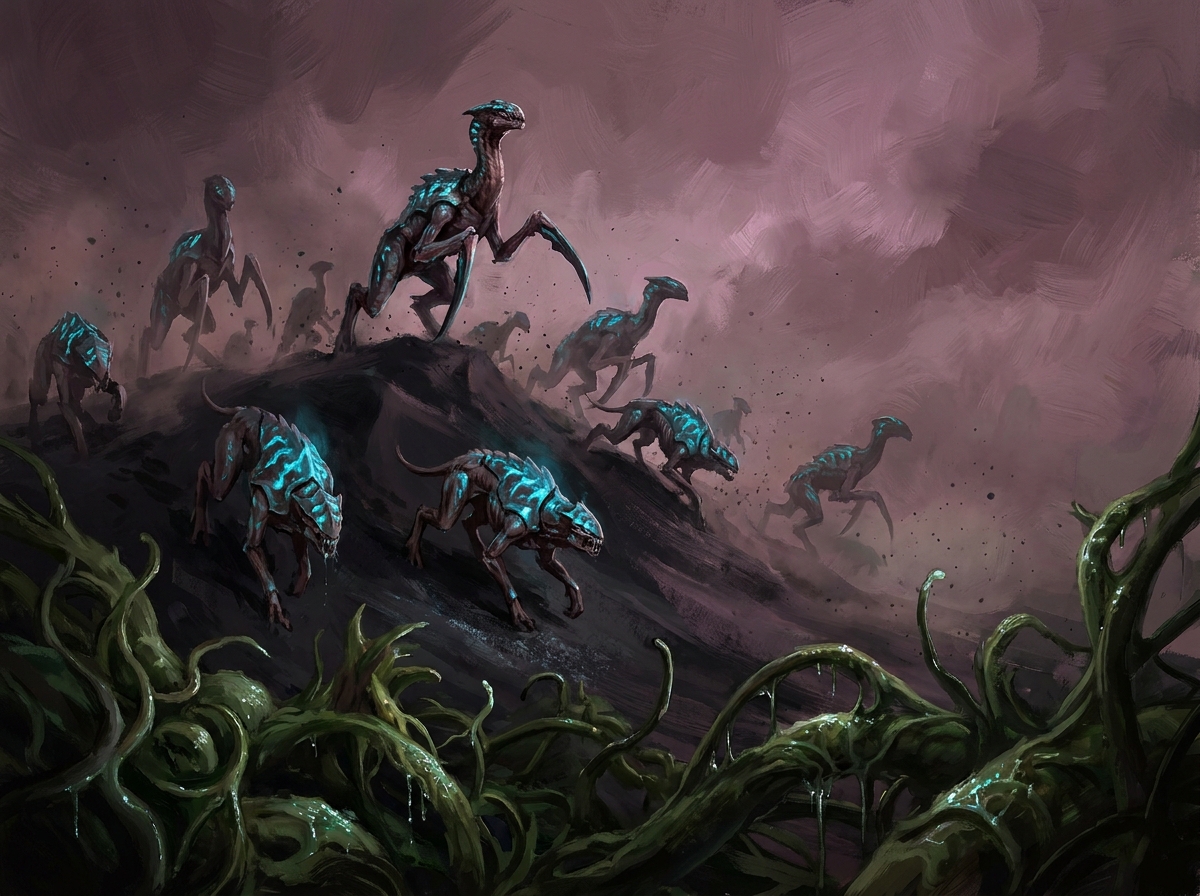
Live specimens acquired on Mar Sara. The animal I designate Study Object 14-C shows secretory gland activity under stress: a corticoid-like molecule, provisionally labelled ZERG-17, with a half-life under ten seconds. Adrenal baseline is permanent. Musculature operates at roughly 140 % of what I would model for this body plan. That explains the overheating signatures in the tissue.
As to reproduction: Zerglings emerge from larvae produced by a specialised drone form. Multiple units from a single larva are documented — twin formation with shared gene expression, a pattern I had previously seen only in pathological contexts. Here it is intentional. The larva duplicates its division template before metamorphosis. Economical, whoever designed this system was thinking in numbers.
Overlords circle above Zergling columns at low altitude. Working hypothesis: chemical signal transmission, analogous to the pheromone systems of eusocial Hymenoptera. I will have to refine this.
ENTRY 003 — Hydralisk Morphology (Mar Sara, January 2500)
Study Object 17-F. Length 5.4 metres, height in combat posture 2.1 to 3.5 metres depending on rearing angle, estimated mass 390 kilograms. The body unites at least seven morphologically distinct feature groups known to me from Terran zoology, combined in a way that does not occur there. The phylogenetic precursor is on record as the „Slothien“ — a semi-intelligent reptilian scavenger native to an uninhabited planet in the Koprulu sector. What the Zerg have made of it is no longer Slothien.
The spines — internally I label them the spine array — are accelerated by muscular contraction, not by a mechanical spring mechanism. Muzzle velocity approximately 400 m/s, atmospheric range over 100 metres. Scythe claws on the forward appendages: suited for close combat and for climbing vertical surfaces. The animal is ranged attacker and climber in one. I note this without comment.
Muscular reflexes exceed by 60 % the values I would model for an organism of this mass. I am re-examining my models.
ENTRY 004 — Mutalisk Mutation Rate (Char, March 2500)
Char. The atmosphere is toxic, the lava channels rule out a ground station; I observe from a no-longer-fully-intact research platform at 800 metres altitude. Mutalisks pass in swarms of thirty to two hundred. Wingspan 4 to 6 metres, body mass 250–300 kilograms. The Glaive Wurm projectile, ejected from a submandibular orifice, transfers energy from one carrier to the next — a biological chain weapon. I have seen no analogous system in Terran or known extraterrestrial biology.
Mutation rate in these units exceeds every parameter I know from evolutionary biology. In sixteen weeks I have documented four morphologically distinct variants. Four. That corresponds to an evolutionary span of — I write a number here and strike it out again, because it cannot be correct. Ten thousand to one hundred thousand years. I write: fast. Very fast.
ENTRY 005 — Preliminary Thesis (Char, March 2500)
After nine weeks of field work I put a first working hypothesis on paper: the Swarm of the Zerg is a predator collective of biological origin, coordinated by chemical and possibly low-frequency psionic signalling. The control pattern resembles eusocial insect states of the order Hymenoptera, scaled to planetary level. Each strain fulfils a defined ecological role. The Overlord serves as a relay station for signal transmission. The larva is the universal production unit.
I am certain. The data support the hypothesis.
I will be wrong.
„You are a mere youngling, recently brought to the Swarm. I have served countless lifetimes, and ever have my mind and the Overmind’s been one.“
— Daggoth to Kerrigan, SC1 / Queen of Blades (Rosenberg 2006)
II. Structural Analysis
ENTRY 006 — Overlord and Queen (Char orbit, April 2500)
Overlords: no combat function. Body volume of 15 to 40 cubic metres, of which a substantial fraction serves as troop transport capacity. The biological antenna — a sensory organ in the dorsal segment — receives and transmits in a frequency range that is neither purely chemical nor purely electromagnetic. I label this provisionally as psionic relay. Its range exceeds every pheromone diffusion radius by a factor of three hundred.
Queens in this phase (SC1 data base, recorded from remote observation): flight-capable, body optimised for atmospheric manoeuvre. Entozyte production, brood care, some offensive capability. I will later learn — through third parties whose identity I withhold — that Abathur has rebuilt this form from the ground up. The Queen of the post-Kerrigan period no longer flies. Whether that is a loss or an efficiency gain is a question I could not yet have asked at the time.
ENTRY 007 — Cerebrate, First Observation (Char, May 2500)
What I took for a mass of dead tissue on the basalt floor is a Cerebrate. Externally: a pale, segmented larval form, three to six metres long, with no visible extremities. Immobile. Chitin outer carapace with deep furrows. No recognisable sensory structure on the surface.
What lies beneath it I see only through footage delivered to me later, from the Brood War: at the moment of destruction a body of light departs the chitin cocoon — tentacles of bioluminescence, visible for one second, then extinguished. In Queen of Blades, Aaron Rosenberg describes this form as the Cerebrate proper: the chitin is only a shell, the orb of light is the entity. I note this and check whether I need to correct my premises.
Cerebrate function: brood commander. Mental link between Overmind and the strain units of its assigned brood. Rudimentary personality — names are used by other Cerebrates and by the Overmind itself, which goes well beyond mere numerical designation. I note this with a question mark.
Killable: only by Void-forged blades of the Dark Templar. Every other form of destruction results in reincarnation through the Overmind. The death of a Cerebrate is therefore not a biological but a metaphysical event.
ENTRY 008 — Daggoth and the Tiamat Brood (Char, May 2500)
Daggoth leads the Tiamat Brood — by every available indication the largest brood within the Swarm. When other Cerebrates are listed in hierarchical order, Daggoth stands first after the Overmind itself. That is not merely organisational placement; it is rank, and considerable rank at that.
Up to this point I had modelled the Swarm as a relatively flat hierarchy: Overmind above, units below, Overlords between them as passive relays. The Cerebrates were nodes in a net. Now I see that the net has weightings. Daggoth is heavier than the others. The Tiamat Brood is more mobile, more numerous, more aggressive than its sibling broods. The Swarm has an internal status topology I had failed to map.
I adjust my model.
ENTRY 009 — The Overmind, First Estimate (Char survey, June 2500)
I cannot observe the Overmind directly. I reconstruct its position and size from psionic echo measurements taken over three weeks with a modified Ghost sensor array. The array was not built for this purpose. The measurement is imprecise. But the order of magnitude is unambiguous.
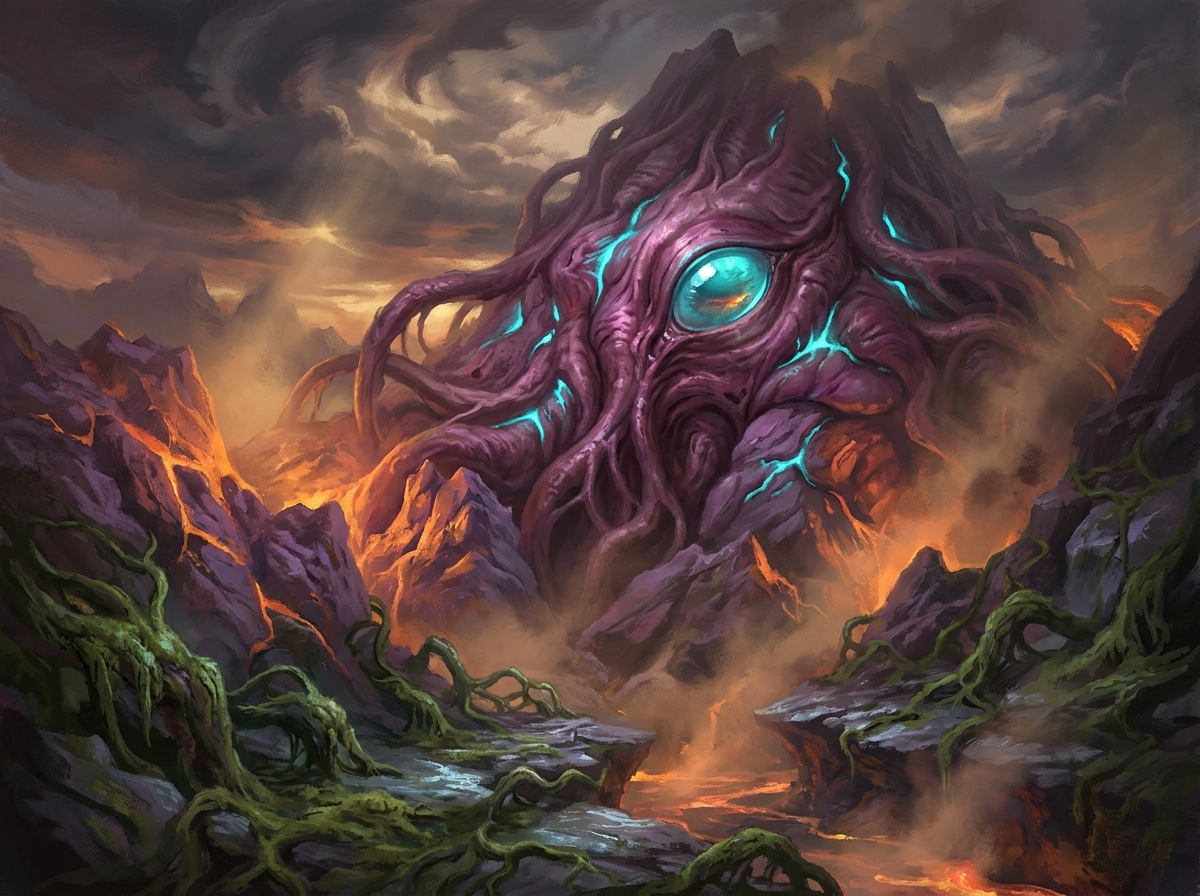
The central consciousness of the Swarm is not mobile. It is rooted on Char — flesh and rock no longer separable. The psionic signature exceeds every comparison value in my data base. A single entity whose awareness extends across every Zerg unit on multiple planets.
I write in my log: „Not a swarm. One being with millions of bodies.“ Then I stare at the sentence for a long time. It sounds like philosophy, not science. I leave it standing.
ENTRY 010 — The Middle Tier: From Queens to Broodmothers (Char, June 2500)
I write this entry in retrospect, with data I would not receive until 2501. The Queen form I described in Act 1 of these records is transformed by Kerrigan’s takeover of the Swarm. Abathur — the Evolution Master, whose function I do not grasp until much later — strips the Queens of flight and specialises them for hive maintenance. In place of the old class, a new middle tier emerges above it: the Broodmothers.
Broodmothers are not Queens with higher rank. They are a different organisational type: heavier cranial chitin, independent personality, capable of survival without their direct creator. Zagara — the first Broodmother, as far as I can reconstruct — shows a self-direction that goes beyond anything I had observed in a Cerebrate. Cerebrates reincarnate. Broodmothers die permanently. That trade tells me something about the economy of the new Swarm that I cannot yet fully articulate.
ENTRY 011 — Strain Catalogue, Preliminary (Char, June 2500)
State of my documentation, chronological by first sighting: Drone (production and terraforming unit), Zergling, Hydralisk, Mutalisk, Ultralisk (six to eight metres at the shoulder, chitin-plated ram of titan-chitin), Lurker — a Hydralisk evolution that burrows into the ground and fires spine volleys upward from below. The Lurker is invisible in its dig-in. I identified it only after samples of a destroyed Terran unit showed spines that had entered from underneath.
Brood Lord: flying, heavily armoured, launches infested drones as living ordnance. I will have to expand the catalogue. The Swarm produces new forms continuously. The list is never complete.
ENTRY 012 — First Correction (Char, July 2500)
I was wrong. What I took for chain-of-command is breathing.
A Swarm colony does not breathe metaphorically. The rhythm of Overlord positions, the movement frequency of Zergling patrols, the pulse of the Creep substrate — it is a breath. The central consciousness breathes, and every visible behaviour is the respiratory cycle. I had described a lung pattern as a nervous system.
What does that mean for my model? That the Overmind is not a giver of commands. It is the medium in which the Swarm takes place. The eusociality analogy no longer fits. I need new categories and do not yet know where to draw them from.
„The Overmind was formed with thought and reason but not free will. It screamed and raged within a prison of its own mind.“
— Ouros to Zeratul, Echoes of the Future, SC2 Wings of Liberty
III. The Swarm Thinks
ENTRY 013 — Tarsonis, the Psi-Emitter Gambit (observation station, August 2500)
Arcturus Mengsk has deployed a weapon of which I previously knew only rumours: the Transplanar Psionic Waveform Emitter. The range, so far as I can reconstruct it from intercepted specifications, is on the order of interstellar distances. Effect: the Swarm loses every trace of tactical coordination and overruns Tarsonis at a density I can describe only as a suffocation assault — units crowd each other as they advance, fight among themselves for position, kill each other in the press.
Instructive. The Psi-Emitter overwrites the Overmind’s respiratory rhythm with an alien signal. The Swarm reacts to that signal the way an organism reacts to toxic stimulant — all capacity directed at a single source, inhibition off. Mengsk has not armed the Swarm; he has poisoned it and pointed it at Tarsonis.
Kerrigan was on Tarsonis. Mengsk refused the evacuation. I write that down without comment. Some decisions do not require scientific classification.
ENTRY 014 — Kerrigan’s Chrysalis (Char, October 2500)
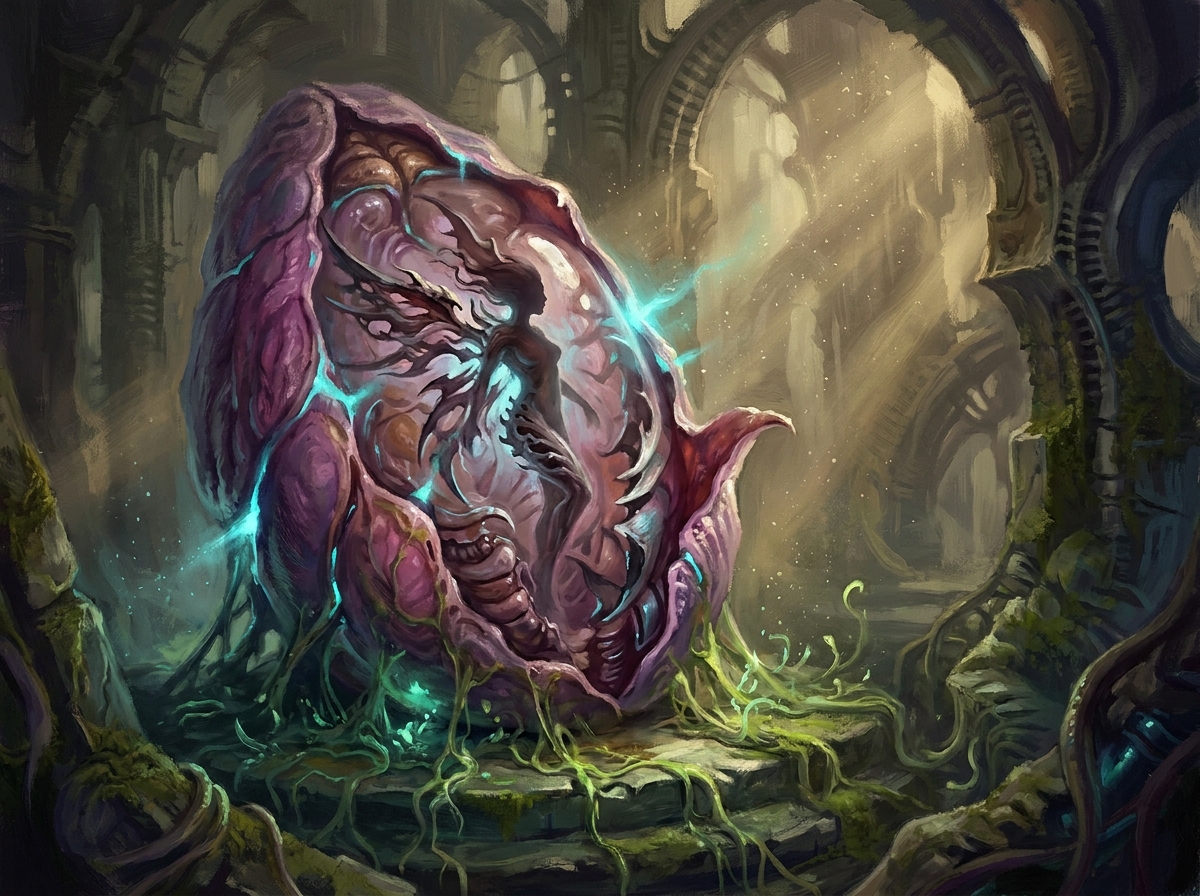
Sarah Kerrigan was brought to Char. The Overmind had planned it: it saw in her — from what I later reconstruct — a tool against the Protoss and, deeper than that, a way out of Amon’s grip. Abathur built the Chrysalis. I will never fully understand the biochemical process, but I know the outcome: sixteen to eighteen weeks of metamorphosis, then emergence.
What comes out of the Chrysalis is not what went in. That is trivially true of any metamorphosis — the caterpillar is not the butterfly. But with Kerrigan the leap is taxonomic. She retains language, memory, tactical intelligence, psionic capacity. She receives everything the Swarm has to offer. „Arise, my daughter,“ the Overmind says. „Arise… Kerrigan.“ It names her daughter. That is, as far as my records go, the first time the Swarm gives a human individual a proper name — not as classification, but as address.
Aaron Rosenberg’s novelisation Queen of Blades is the canonical source for this phase — anyone seeking to understand how Kerrigan experiences the Swarm from within will find it there. I can describe only the outside view: a cocoon breaking open, and a woman who is no longer entirely a woman.
ENTRY 015 — Overmind on Aiur, Tassadar’s Sacrifice (Aiur, 2500)
The Overmind learned the coordinates of Aiur through Zeratul. That sounds like betrayal; it was none. Zeratul killed the Cerebrate Zasz in an attempt to weaken the hive mind — and whoever touches the hive mind gives it what they know. The Overmind learned Aiur and hurled itself there like a mass of free-falling flesh architecture, millions of tonnes of organic material landing on the Protoss homeworld.
Tassadar answered with the Gantrithor. He channelled both — the Khala, the collective Protoss consciousness, and the Void of the Dark Templar, the dark sister-energy. That was heresy. And tactics. And sacrifice. The Gantrithor rammed the Overmind body; the combined energy release destroyed it permanently.
I sit now with the data and try to understand what happened in that moment. The Overmind was the entire Swarm memory, the entire Swarm will, the entire Swarm sensorium. It had never had free will — Amon had formed it with thought and reason, but without freedom of will. Its last moment, in every reconstruction I know, was contentment. It had created Kerrigan. It had left a way out.
Its first free thought was its last.
ENTRY 016 — Brood War, Cerebrate Civil War (Char, 2500–2501)
After the Overmind’s death: Daggoth fuses the remaining Cerebrates into a Second Overmind on Char. Immature, unstable, but functional enough to coordinate what is left of the broods. In parallel, Kerrigan holds roughly half of the Swarm under her direct control as the Queen of Blades. Two centres of gravity, one organism. The system cannot bear it.
The United Earth Directorate arrives with a fleet commanded by Admiral Gerard DuGalle and Vice Admiral Alexei Stukov. Their instrument: the Psi Disrupter, originally a Confederate development of emitter technology, which enslaves the Second Overmind and drags the Daggoth broods as Slave Broods under UED control. Stukov, who regards the technology with scepticism, is eliminated by DuGalle — at Samir Duran’s instigation — as a traitor. I log this as an internal conflict of an organisation that styled itself the sector’s liberator and brought along a biological weapon of mass destruction as its tool.
Kerrigan manipulates Zeratul — through Raszagal, the Matriarch of the Dark Templar — into killing the Second Overmind. With that, the UED’s means of control falls away. The Slave Broods return to Kerrigan. DuGalle withdraws. The UED expedition ends without the control it had sought.
ENTRY 017 — Kerrigan Alone, Cerebrates Extinguished (2501)
After the Brood War, Kerrigan hunted down and destroyed every Cerebrate. Dark Templar blades on her order, so far as I can reconstruct. One Cerebrate was spared — for the Infested Terran project, a research direction on which I have only fragmentary data. The rest is extinguished.
With that, the Swarm’s middle tier stands vacant. A Swarm without Cerebrates is a creature without nerve bundles — the central consciousness can innervate the extremities directly, but the processing speed and local autonomy the Cerebrates offered are gone. Kerrigan has simplified the system and centralised her own position. What results is not an optimised Swarm, but one differently organised.
ENTRY 018 — Broodmothers as the New Middle Tier, Zagara (2501–2504)
Abathur solves the middle-tier problem his own way. Broodmothers are not built on the Cerebrate schema — they do not reincarnate, they do not cooperate in fusion processes, and they have one feature I never documented in a Cerebrate: the capacity to operate without their creator. Zagara is the first. She is more loyal than the later Broodmothers because she accompanied Kerrigan directly through the construction of the new system. Yet even Zagara follows the strength principle: loyalty is owed to whoever is strongest.
When Kerrigan is deinfested in 2504 — through a Terran intervention on Char that I know only from secondary sources — the Broodmothers lose their primary anchor of loyalty. Internal wars follow. The Swarm fragments. For four years, what I had mapped as „the Swarm“ is no longer a Swarm. It is factions.
ENTRY 019 — Stukov, the Infested (dark planet, recorded 2503)
Alexei Stukov was revived on a dark planet — the Cerebrate Kaloth was charged with the task. The outcome is an infested Terran who kept his will intact. Half Zerg, half human, entirely Stukov. I have no other documented instance in which the Swarm transformed a human and subsequently allowed that human to persist as an independent individual.
In that sense, Stukov is the first sign that the hive mind can be permeable — not every assimilation erases the subject. Whether that was Kaloth’s intention or an error remains open. Some of the infested carried their own cognitive architecture forward. Stukov is the most visible case.
ENTRY 020 — Flashpoint, Primal Foreshadowing (2504)
Kerrigan’s passage between her Terran interim state and her return to the Swarm is documented in Christie Golden’s Flashpoint — Umoja, the attempt on Mengsk, the choice. What preoccupies me most there is not the choice itself. It is the fact that it was a choice. Kerrigan turns back to the Swarm because she needs it to kill Mengsk. Not because the Swarm compels her. The Overmind is dead. Nothing and no one compels her any longer.
I consider that more significant than I realised at the time. A Swarm one turns to voluntarily is something other than a Swarm that assimilates. Zerus will confirm it — a planet I had not yet placed on my map at this point.
No loyalty but your own survival. Kill or be killed. — paraphrased, Zurvan the Ancient One, SC2 Heart of the Swarm
IV. Origin and End
ENTRY 021 — Zerus, Primordial Jungle (2505, data relayed)
Zerus breathes. Zerus consumes. Zerus does not wait.
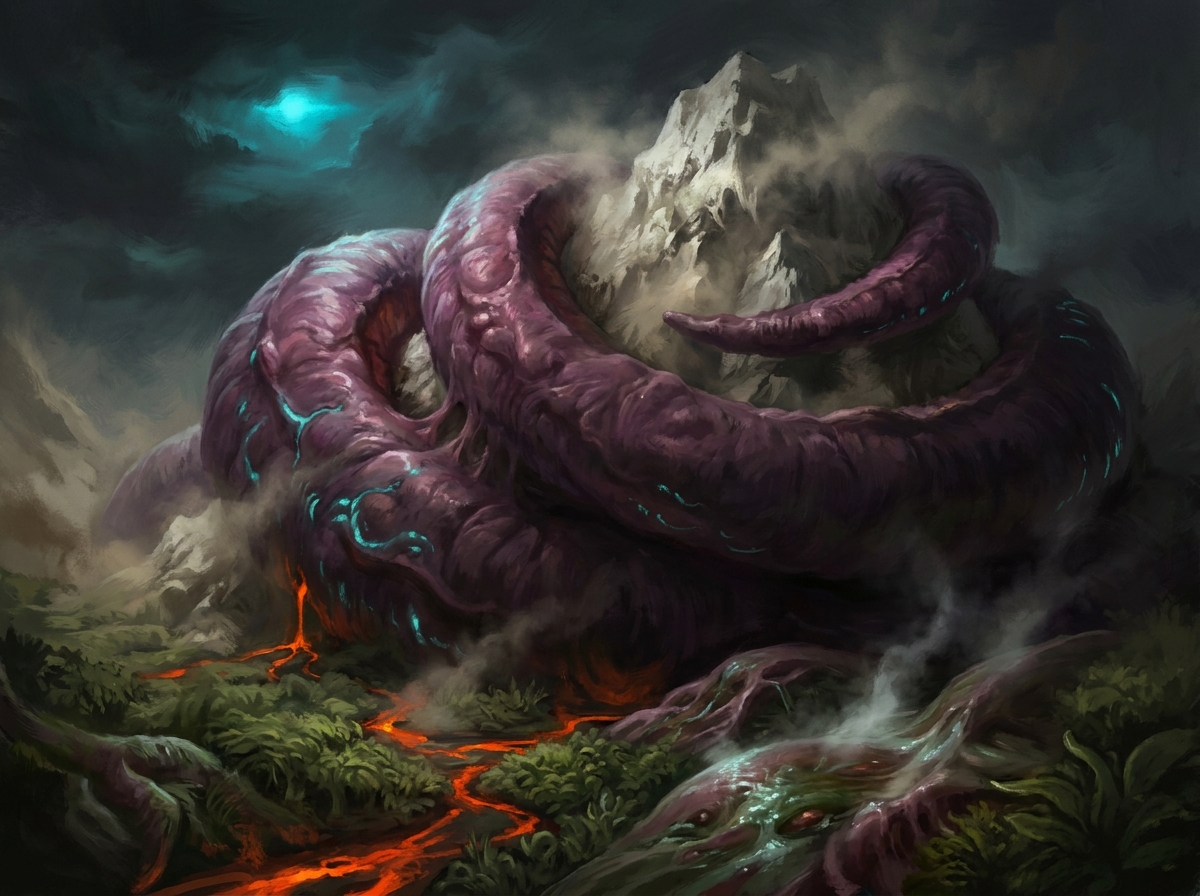
I do not mean that metaphorically. The planetary biostructure is active — lava channels as a circulatory system, primordial jungle as tissue, the First Spawning Pool as something for which I have no word except heart. Zurvan has lived here for a span I cannot measure in generations. He is the Ancient One, older than the first Overmind, yet younger than the First Spawning Pool itself. He does not age. He grows. He consumes and integrates. No laboratory. No protocol.
The data from Kerrigan’s Zerus expedition reached me via third parties whose reliability I cannot assess. But the substance is unambiguous: Zerus is not the origin of the Swarm as I knew it. It is the origin of what the Swarm could have been, had no one intervened.
ENTRY 022 — Xel’Naga on Zerus, Amon’s Intervention (2505, reconstructed)
The Zerg before Amon were insignificant — „insignificant life forms“ in the diction of the Xel’Naga sources. Migratory, quickly mutating organisms without structure. What Amon saw was potential: the capacity for essence absorption, rapid adaptation, biomass scaling. He intervened and forged the hive mind, bound the Zerg to one another, instrumentalised the Xel’Naga concept of Purity of Essence as the ideological core. In canon, Purity of Essence denotes a species‘ capacity for fundamental biological change — evolutionary potential, adaptability, the ability to absorb and integrate foreign essence. The counter-principle is Purity of Form, embodied by the Protoss, whom Amon forged in parallel: optimised in body and mind, fixed in a completed shape. Amon recognised which of the two sides was easier to grind into a weapon.
Christie Golden’s Dark Templar trilogy — available as a book bundle — lays out this underpinning in detail: Amon as fallen Xel’Naga, Ouros as the last conservator of the order, the Infinite Cycle as the cosmological principle against which Amon rebels. Without that perspective, the Zerus story is a biology anecdote. With it, it becomes a philosophy.
Amon took the Primal Zerg’s individual will and gave them purpose in return. That was not a gift.
ENTRY 023 — The Primal Zerg as Alternative (Zerus, 2505)
Some Zerg escaped Amon’s intervention. They buried themselves in the soil of Zerus and stayed there — free of the hive-mind bond, immune to psionic manipulation, unmarried to the collective. They kept what Amon took: individuality, direct essence absorption, the compulsion to evolve without command.
Dehaka puts it more plainly than I could: „I do not need a wall, I will evolve armor.“ The Primal Zerg requires no hierarchy. It requires an obstacle to grow against.
I sit with this insight and ask myself what I have actually been studying for the past five years. The Swarm as it was — the product of an intervention, a forced form, biologically brilliant and fundamentally unfree. The hive mind was a decision Amon made for the Zerg, not a natural developmental necessity.
The researcher sitting at his desk, believing he was describing evolution, has in fact spent five years mapping a prison.
ENTRY 024 — Kerrigan’s Primal Transformation (Zerus, 2505)
Zurvan was roused by Quillgor flesh. Brakk — a pack leader of the Primal Zerg — attacked Kerrigan. Brakk died. Zurvan led her to the First Spawning Pool. She immersed herself.
What emerges is more than the Queen of Blades had been. Primal essence on a Zerg substrate grafted onto human psionics: stronger, faster, freer. Zurvan turned against her — pack-leader logic, strength tests strength. Zurvan died. Dehaka fell in with her because she was stronger. „Zerus became hers“ — a phrasing from observation logs I did not write myself, but which is precise.
Yagdra, Kraith, Slivan — three further pack leaders killed in the mission Supreme. I record the names because they appear in my data. They deserve one line more than collateral damage.
ENTRY 025 — Mengsk’s Death, Ascension (Korhal / Ulnar, 2505 / 2508)
Korhal, April 2505. Mengsk had deployed the Psi Destroyer — a weapon that severs psionic contact with the Swarm and renders every Zerg-linked unit uncontrollable. The Primal Zerg’s immunity to psionic influence circumvented it. Kerrigan reached the panic chamber of the palace. Mengsk died. Valerian Mengsk became emperor.
What comes afterward exceeds the bounds of my documentation. I record it from secondary sources, without claim to completeness: Ulnar. The last conservative Xel’Naga, Ouros, transfers his essence to Kerrigan. A dying god gives to a woman who was once a Confederate intelligence officer the essence of the Infinite Cycle. Zagara defends the eastern front while Kerrigan transcends into something I can no longer classify. Kerrigan kills Amon for good. 2508.
Zagara becomes Overqueen. Kerrigan hands Zagara the Adostra essence and the freedom of choice. Purity of Essence — the capacity for change — remains. Only the purpose of the change is different: no longer assimilation, no longer Amon, but coexistence.
Simple. Elegant. Product variable, intent invariant. Always improvable. — paraphrased, Abathur, Evolution Master, SC2 Heart of the Swarm
Final Entry
ENTRY 026 — (no date, no location)
No laboratory. No notes. Only the hum.
Zagara leads the Swarm now. I know it from signal patterns I pick up without looking for them. A Swarm that no longer has to destroy in order to grow — that is a finding, and it is stranger than anything I have written down in six years.
Zurvan saw me. Kerrigan saw me. I hear the Swarm breathing.
Purity of Essence. I think I understand now what Amon wanted with it — and why he failed. The flesh remembers. The flesh chooses. That was the answer all along.
I put the pen down. Or whatever I use in place of a pen. That is immaterial.
In the tabletop context: in the current TMG lineup, Zergling, Hydralisk, Mutalisk, Queen and Ultralisk count among the Zerg core troops. The Lurker brings a tactical trait: while stationary during the movement phase, an Evade roll applies against ranged attacks. Kerrigan is represented as a hero in her Primal form — she brings a Zergling escort brood, unlocks Nydus Worms, and her signature move is Leaping Strike. The Broodmother and Primal Zerg as a sub-faction are slated for an early wave according to Archon Studio statements to date (AMA, January 2026); the final wave assignment has not yet been fixed. All mechanical details on Zerg playstyle in the rulebook deep-dive.
What came next is another story — one that is older and told in a language no researcher has ever fully translated: Khala and Void — The Last Guardians.